How The "Have It All" Era Still Runs Your Life
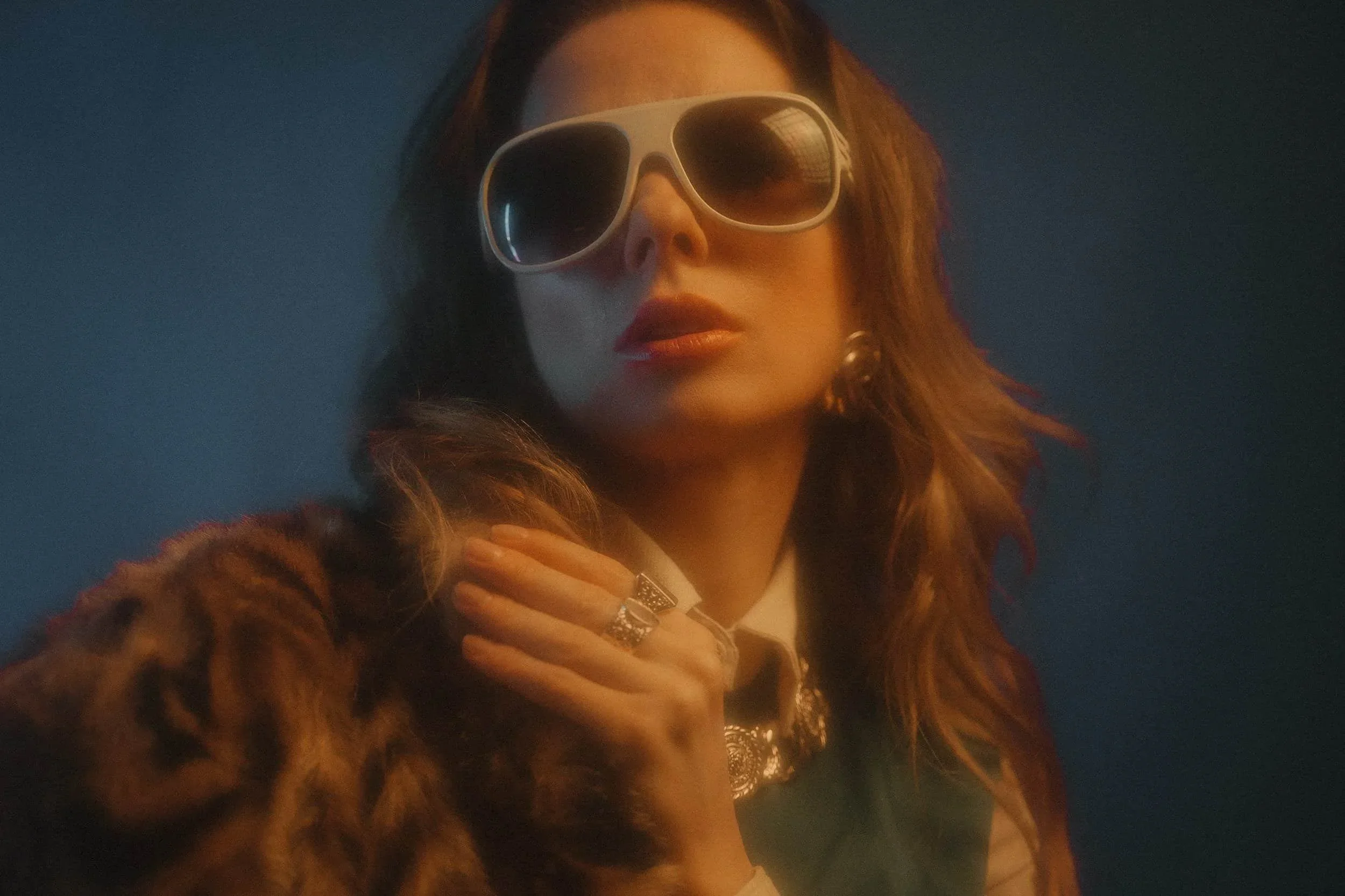
Ahh, the eighties. A decade defined by great music, bad hair, and the beginning of the notion that women could have it all.
Margaret Thatcher became the first female Prime Minister of Great Britain. Sandra Day O'Connor became the first woman nominated to the U.S. Supreme Court. Alice Walker became the first African American woman to win the Pulitzer Prize for fiction for The Color Purple. As Aretha Franklin and Annie Lennox reminded us, this was a time of sisters doing it for themselves.
The heady excitement of padded shoulders and power trickled down to us from shows like Dynasty and Dallas. All of a sudden we could have kids and careers. Women were claiming identities outside of family roles and all things felt possible.
I was born in 1974, the year that The Equal Opportunity Credit Act passed in the US. Single, divorced and widowed women were able to apply for credit and loans without needing a man to sign and guarantee their application. It would be another year before this was possible in the UK.
In 1982, the now-infamous commercial for Enjoli perfume was released. In it, Charlie's Angel and fashion model Shelley Hack dons a series of outfits from slinky dress to blouse to business suit, all the while spritzing herself with "The 8 Hour Perfume for the 24 Hour Woman." The not-so-subtle accompanying jingle informed us that women could "bring home the bacon, fry it up in a pan" and, perhaps most disturbingly of all, "never let you forget you're a man."
The notion that we could have it all was interwoven with the belief that we should do it all. For 24 hours a day, no less.
The "No pain, no gain" slogan that dominated the fitness world also made its indelible mark outside the gym. Women were expected to work twice as hard as men for less money, simply for the privilege of being given opportunities in the first place. We hadn't yet coined the phrase "hustle culture" but we'd certainly started to glorify productivity, and if staying on top of everything was a struggle, well then we just had to power through.
Our hard won rights looked good on paper but were draining in reality. Glass ceilings may have been smashed and laws may have been changing in our favor, but society's views on what a "good" woman was expected to contribute without complaint were as outdated and sexist as ever.
Fast forward to today and we've made great strides in many ways.
The last four decades have seen many more breakthroughs for women in the U.S. alone, with Janet Reno becoming the first woman Attorney General, Nancy Pelosi becoming the first woman Speaker of the House, and Kamala Harris becoming the first woman and the first woman of color Vice President.
The third wave of feminism that began in the early nineties gave us more intersectionality and the ability to define our lives in ways that weren't wholly centered through a heteronormative lens. We were no longer accepting crumbs from the patriarchal table. The identities we'd claimed for ourselves in the eighties were now evolving, and so, too, were our goals. Supposedly, we were a million miles from the fifties housewife stereotype (or indeed the eighties perfume commercial) and liberation was ours to enjoy.
And yet, arguably, Gen X women might be under more pressure than ever before. For many of us, keeping up appearances has never been harder.
Our grandmothers were used to measuring their success (and self-worth) by the size of their homes and the sparkle factor of each room. Our mothers added bathroom scales to the mix and our weight became another way to show the world how worthy we were.
Today, our supposedly perfect lives are in a digital display cabinet, ready to be assessed by likes, emojis and affirming comments. We're compelled to share every win as evidence of our success. Because if it's not an Instagrammable moment in a pretty square box, then where's the proof?
"You can have it all!"
"You can do it all!"
"You can attempt to juggle it all!"
"You can showcase it all!"
With more than a little help from capitalism, we've continued to build on the "kids and career" phenomenon. And build, and build, and build. Now, we have our so-called options stacked up like a precarious tower that threatens to topple over at any moment. But we keep adding on more because aren't we so damn lucky to have the opportunities our grandmothers longed for.
In our forties and fifties we're taking care of more than we ever have. We're (still) raising children, paying mortgages, supporting partners, caring for ailing parents, planning for retirement, holding down jobs, forging forward with careers, learning new skills, caring for pets, navigating our hormones and trying to figure out (ha!) why we're so tired.
The world is moving at a faster speed than ever before and we're not supposed to slow down. Any creative pastimes we might enjoy to take the pressure off are instantly mirrored back to us as opportunities to monetize. That poetry you love to write? Sell a book! That sketching that helps you switch off? Open an Etsy store! That portrait photography that brings you joy? Teach a course!
It doesn't end there.
As we ride the merry-go-round of everything (and post constant updates to our highlight reel to show what a wonderful time we're having) we're also expected to produce receipts that vouch for our commitment to be the most meaningful activist, the most ethical philanthropist, the most conscious consumer, and the most sustainable shopper.
[Please don't forget to look sexy as you seamlessly flit between each of these roles.]
It doesn't end there, either.
Meals should be organic and homemade. Exercise should be daily for a minimum of 30 minutes. Technology should be embraced, but not first thing in the morning or last thing at night because that's when we need to meditate, have mind-blowing sex, and go through the seven steps of our skincare routine.
Travel is a tricky one because it should be far flung and expensive but also take a boat to save the planet even though you only have a five day vacation that will still require you to respond to texts and emails for the duration.
Then there's the isolation. The silent struggle of feeling as though we're drowning by trying to keep up with all the things, but God forbid we should complain about any of it because aren't we living the Suffragette's wildest dreams?
Gen X women also witnessed the climb of the new age spiritual movement which began in the 1970s and hit the mainstream in a huge way in the early 2000s.
According to the bestselling book The Secret, all that stood between us and the manifestation of our dreams was our thoughts. We could attract abundance by course correcting our mental chatter. If our lives didn't look like we wanted them to, there was nobody to blame but ourselves. It was no longer a case of working hard enough, we also had to visualize precisely enough.
Alongside this came the burgeoning popularity of MLMs. From cosmetics to candles to Tupperware, multi-level marketing was a way for us to host parties and make money. We could be wealthy and independent, and of course retain the flexibility to be available for all our other commitments. We were assured that it wasn't manipulative to recruit friends and family as distributors in our downline because we were merely offering them the chance to have their own cup overfloweth. Cha-ching!
We also saw a number of MLMs cash in on how seduced we all were by the idea of manifesting abundance. They readily adjusted their marketing copy to reflect this and convinced us that if we were really ready to be spiritually awakened then of course we'd be prepared to invest in the lifestyle we deserved (that absolutely most definitely was not a pyramid scheme).
But there was no time to dwell on any of this because soon to come was self-care and the disapproval of burnout as a badge of honor. Suddenly hustle was a dirty word and the glorification of busyness was frowned upon. Cue, barefoot and fancy-free living in a tiny house in the forest with a regular dabble into Ayahuasca so we could really shake off those shoulder pads and finally (finally!) be true to our authentic selves.
Unsurprisingly, we may well have arrived in midlife not knowing exactly who our authentic self is. Buried under the rubble of Having It All, Doing It All, Attracting It All, Showcasing It All and now Shunning It All is a woman who's simply tired and uncertain.
Knocked sideways by the hormonal avalanche that is peri/menopause, we're overwhelmed by trying to keep up with all the responsibilities that were sold to us as opportunities. Yet we're expected to give midlife a Marie Kondo makeover and gloss over the reality of how challenging it can often feel.
Women are living longer than ever before, but we're burning out faster. We're rarely able to relax into a moment because we're always considering the 27 other things we really should be doing right now.
We use apps on our phones to give us feedback on how well we're exercising, eating, meditating and sleeping. We've put a buffer between us and our intuition because we've sold our collective souls to Silicon Valley. We don't honor our natural rhythms because we no longer know what they are.
Lisa Taddeo summed it up in her refreshingly honest book Three Women: "We pretend to want things we don't want so nobody can see us not getting what we need."
But what is it that we need?
We need to stop replicating and start reconnecting.
Every decade after the eighties gave us a new version of the same instruction: perform better, produce more, prove yourself within a system that ignores matriarchal values entirely. The patriarchal model of success was the only one on offer, so we took it and ran. We ran hard. And we're exhausted.
Our true selves are buried beneath a mountain of compromise we’ve been told to call choices. We’ve lost our connection to our bodies and what they know. Our connection to the earth and to rhythms that exist outside of productivity. The practices that actually nourish a woman's life instead of depleting it. And underneath all of it, the most basic thing of all: permission to want what we want without having to justify it against a deeply flawed model.
We don't need another framework for how to live. We need to come back to ourselves.
We're in what might be the middle of our lives, carrying an inheritance of hard-won progress alongside a bone-deep exhaustion that nobody warned us about. But we have an opportunity to stop performing and start living from something real. Something rooted in who we are when we're not trying to be what the world expects.
We can keep building on a blueprint that was never designed for us. Or we can be brave enough to reconnect with our core truth and courage, finally creating a life we feel alive in.
If you’d like to stop feeling pulled in a hundred different directions and instead come back to yourself, take a look at Touchstones - personalized meditations that keep you rooted in who you are and what you want. You don’t have to juggle it all. You simply have to remember your own inner truth. A Touchstone helps you do exactly that.